
John Hancock is studying Clinical Neurosciences and splits his time between the National Institutes of Health (NIH) in Washington DC and Cambridge. He will be awarded his PhD in May and tells us about his postgraduate experience in this Q&A.
Please describe your research.
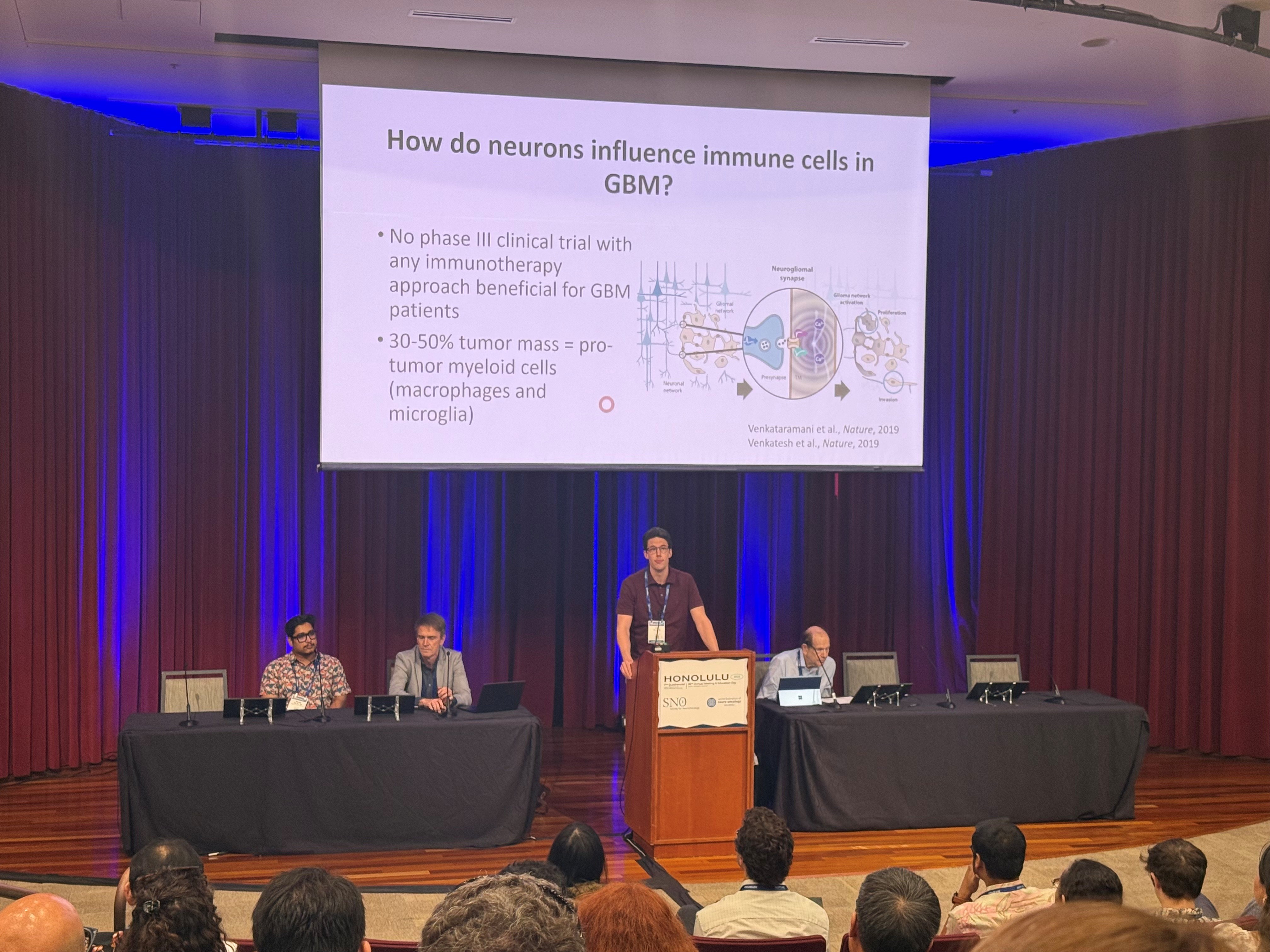
I have been working with Mr Richard Mair who is a neurosurgeon scientist at Addenbrooke’s and the CRUK Cambridge Institute. My work has focused on how neurons interact with immune cells in glioblastoma (a deadly brain cancer) and how we can utilise this interaction for new therapeutic opportunities.
Why is the research important?
Currently, glioblastoma is incurable and patients only have 14-17 months to live after diagnosis, with the standard of care not having any change in over 20 years.
What has your research suggested about potential new therapies?
Immunotherapy (using the immune system as a novel cancer treatment approach) has previously been doubted and has not worked when treating brain cancer. There was a time when the brain was considered to be 'immune privileged' or that the immune system does not operate there like it does in the rest of the body. We are learning that this is may not fully be the case and my research shows that immunotherapy may be more of an option than we previously would have supposed.
What is a typical working day for you?
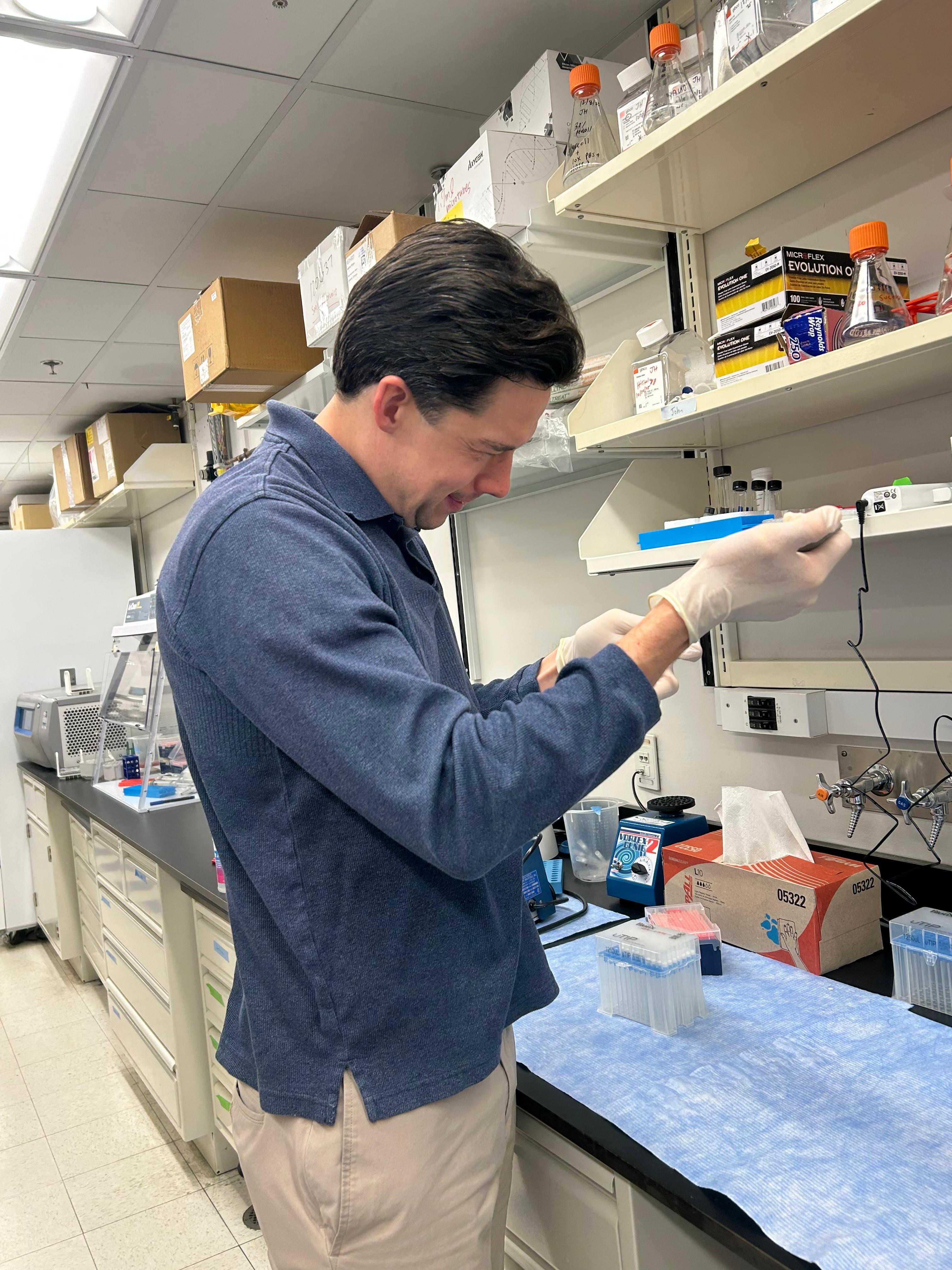
I have loved the PhD experience because it is different each day and requires a lot of strategy and innovation. Some days are spent reading papers to understand where the field is going, while others are quite labour-intensive processing samples and testing them. Data analysis and discussing the results with collaborators are also some of the most rewarding parts of the experience.
You recently sat your viva. What is that?
The viva is an oral examination to defend my PhD research. It is an opportunity to discuss my findings with experts in the field and they are able to test the depth of my knowledge.
Please tell us about your educational background.
I completed my undergraduate studies at Brigham Young University in the USA and then went to medical school at the University of Utah. I realised in medical school that my passion for mechanism and deeper understanding of how the body works would require a PhD. The medical degree and PhD have been the best decisions that I have ever made.
What was your experience like as a postgraduate at Christ’s?
I had a wonderful experience at Christ’s! Everything from formal halls to Charles Darwin made the time exceptional.
What are the benefits of bases in both in the US and the UK?
I was able to gain a perspective from different laboratories, which enhanced the breadth of my training. Different labs and individuals have different talents and understanding. Splitting my PhD between two groups allowed me to absorb as much as a I could from each environment.
What are your future plans?
I am planning on a career in neuro-oncology, following the path of my supervisor in Cambridge. Richard Mair is a neurosurgeon who helps care for brain tumour patients, while also conducting research at the CRUK. I have learned from him that lab becomes an extension of the surgical theatre, which provides a unique opportunity to discover important breakthroughs.
John has also received financial support from the Cambridge Philosophical Society which provides grants for members within the University of Cambridge scientific community.