

Professor Jenny Gibson is Christ’s Inclusion Co-ordinator. Here she tells us about her new role and the importance of the Library+ Project.
What does the Inclusion Coordinator do?
My role provides a point of connection between all those working together to create a truly inclusive community at Christ’s, including academic, pastoral and operational aspects of College life. So far this has focused on Neurodiversity and included professional development activities for Fellows and staff and initial consultations with students to understand their perspectives.
Why is it important?
So that everyone in our College community feels they are supported and enabled to thrive.

What does neurodivergent mean?
Neurodiversity is the idea that population level variation in brain development, cognition, and sensory processing is a natural and desirable phenomenon. Each person's ways of behaving, thinking and processing sensory information will be different from everyone else’s, but most people find it manageable to adapt to everyday situations.
For a significant minority, differences in cognitive and sensory processing are more marked, meaning that there may be a mismatch between what individuals need to flourish and environments that are tailored only to the needs of the majority. When this mismatch happens we use the term neurodivergent.
Why do you support the Library+ Project?
Libraries are essential spaces in an academic community. The Library+ Project is important because it will create a variety of study spaces, enabling students to find locations with sensory and social properties that work best for them. This reflects the principle that buildings should be ‘inclusive by design’.
Why are different types of study space important?
Different individual preferences and learning goals will require different spaces. For some, studying quietly alongside others, brings a sense of companionship and accountability. Other students will benefit from small group spaces to talk through problems & ideas together – this helps to consolidate learning.
Variation in the types of lighting and ambient noise associated with different spaces will also allow students to explore and find the best match for their sensory needs.
What might these spaces look like?
In practice this will mean nooks for secluded study, long tables for ‘parallel’ study, and provision of rooms for group working. It will also mean availability of natural light, temperature control, and considered placement of shelving and flooring to help dampen noise.
-
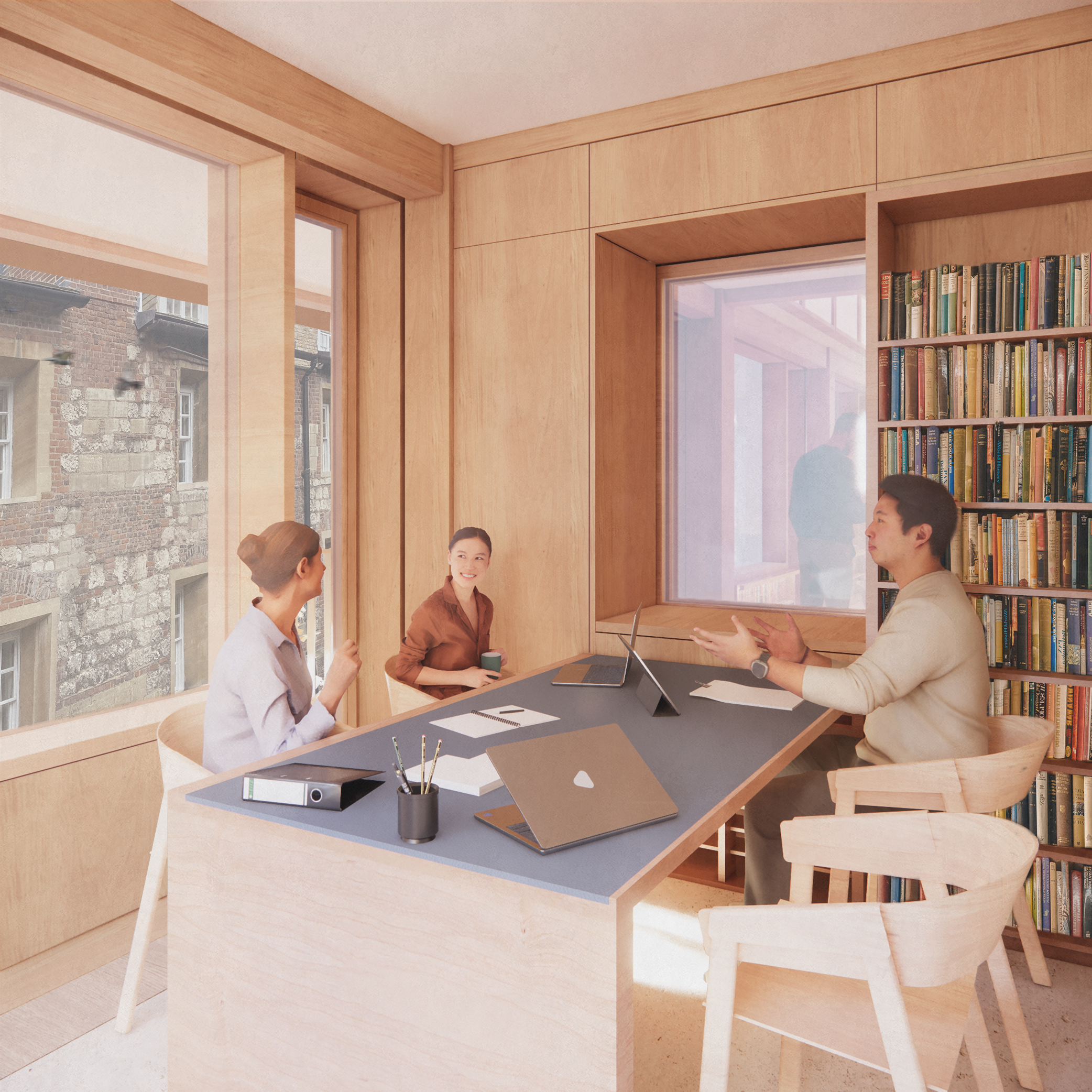
Small group study room
-
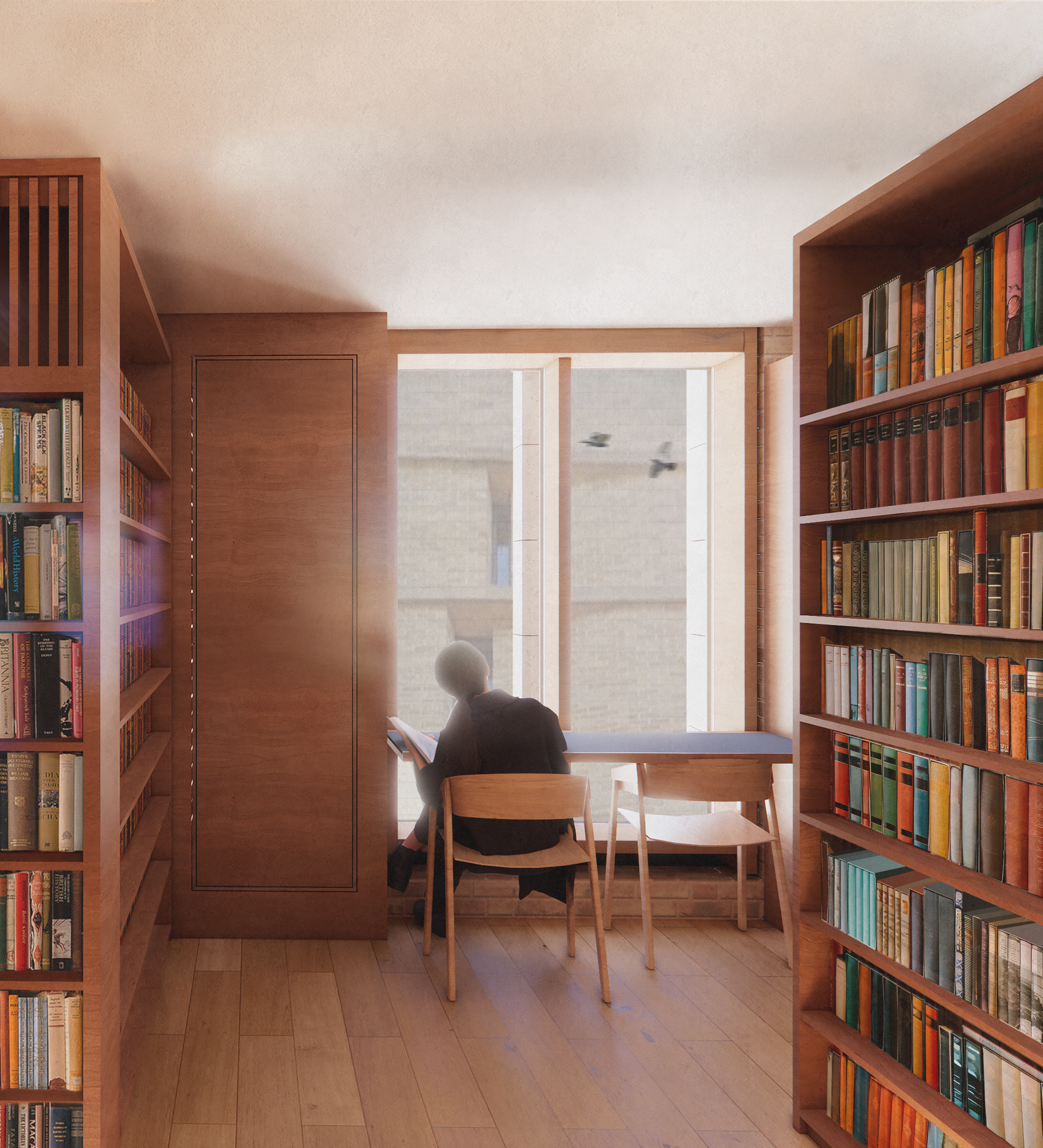
Individual study space
-
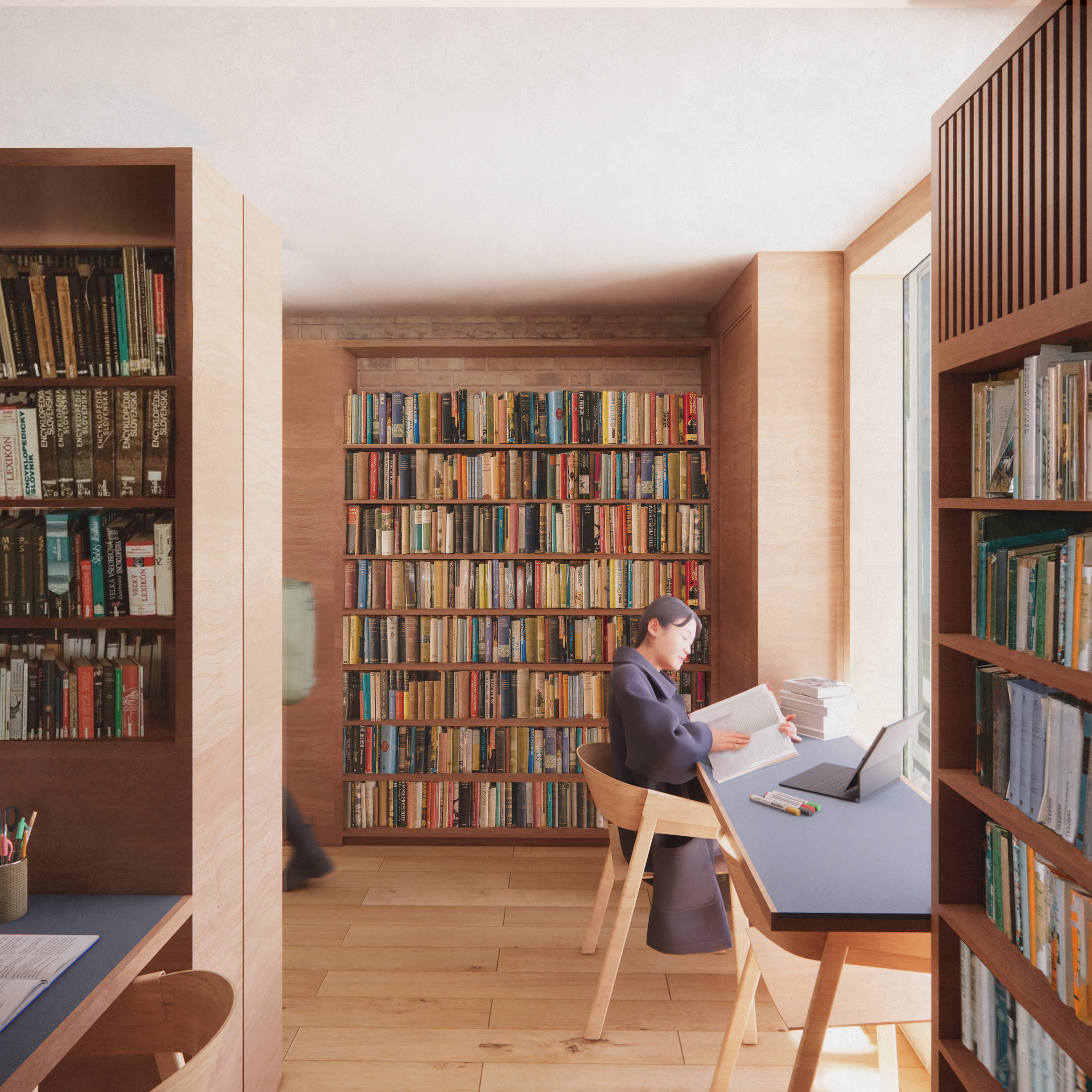
Individual study space
-
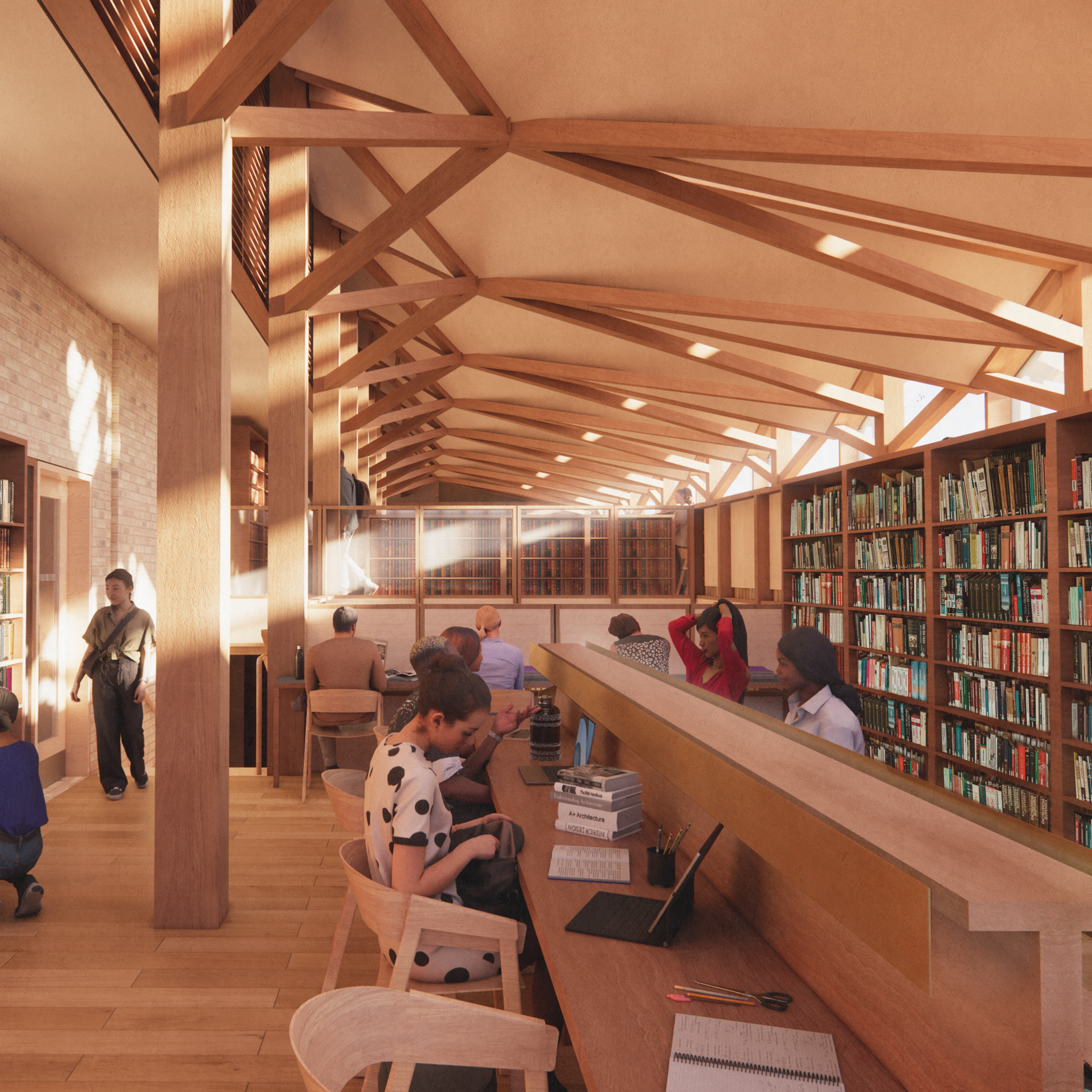
Parallel study space
-
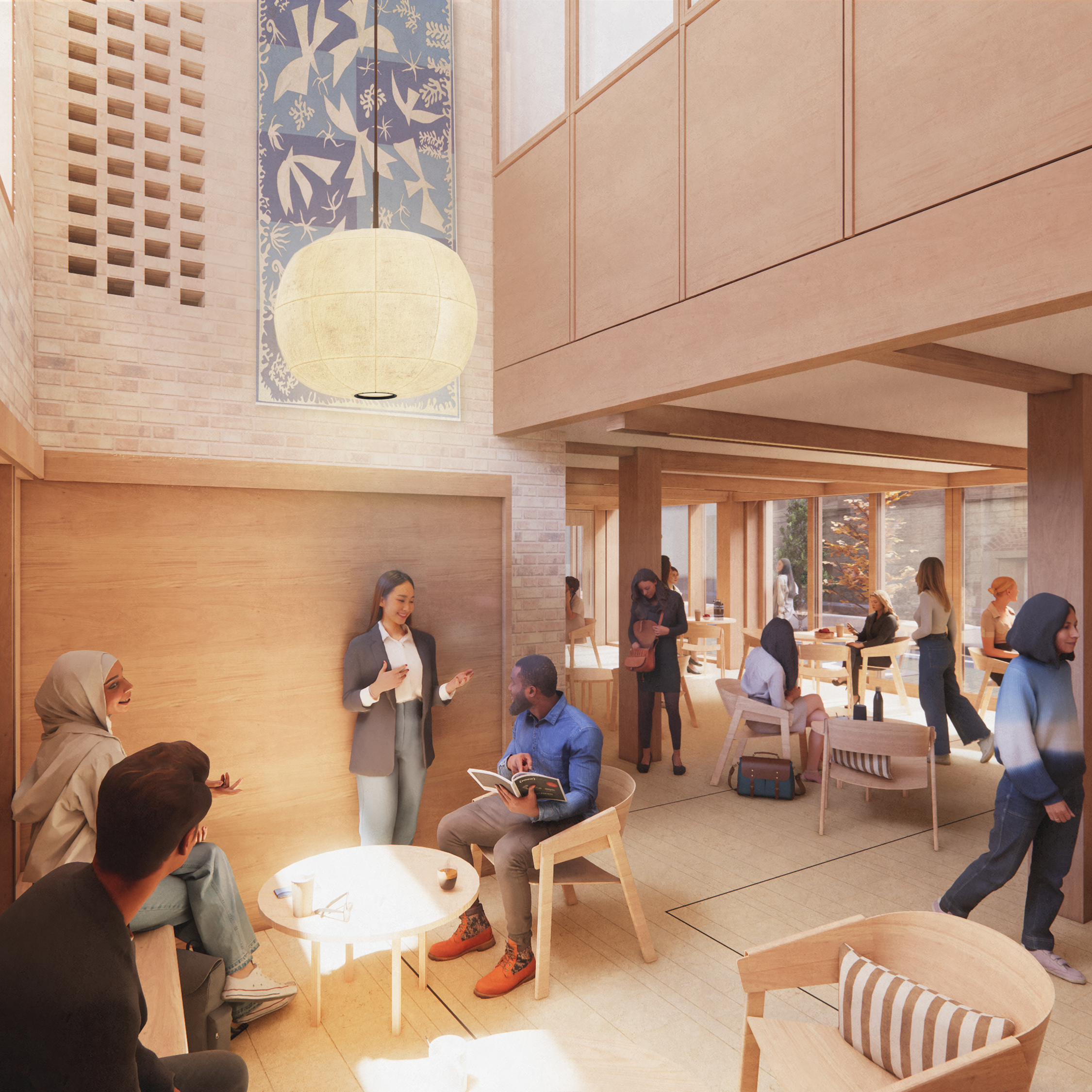
Social study space