
William Henry Denham Rouse entered Christ’s as an undergraduate in 1882, the start of a lifelong association with the College. He is perhaps best known for his headmastership of the Perse School in Cambridge, where he steered the school from the verge of bankruptcy to a sound financial and academic footing and revolutionised teaching methods, especially of the Classics. He was also an enthusiastic translator and editor of much literature in the classical languages, including Sanskrit, and in various Indo-European languages.
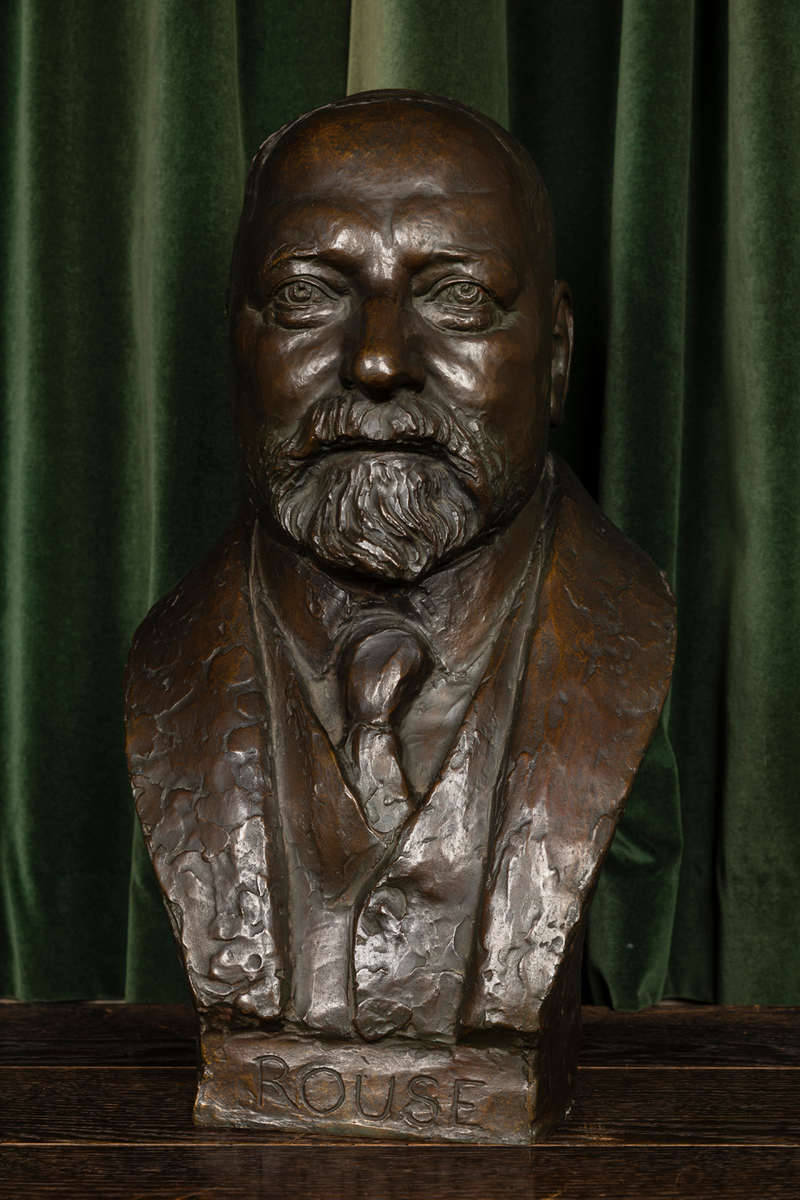 His love of literature led to a passion for collecting. The focus of this short article is his collection of early printed books, which came to Christ’s probably in 1933 and 1940, through the agency of A.L. Peck, who had been a pupil of Rouse’s at the Perse and was then College librarian. This collection reflects Rouse’s interest in Classics and in English translations of foreign literature, but the subject matter is very wide-ranging; it includes works on cookery, medicine, botany, husbandry, anthropology, travel, geomancy and even palmistry. There are also numerous early editions of English poetry. Many of the books are illustrated, some hand-coloured. They are not all in perfect condition though; some lack title pages, colophons and other material, suggesting that Rouse was more interested in the contents of literature than in bibliographical perfection. This of course leads to the fun and rewarding part for the rare books’ cataloguer – the research to find out exactly which copy of which edition I have in hand. It is also interesting to note that many items in the collection came from Gustave David’s Cambridge market stall, the predecessor of the present-day David’s bookshop.
When the Upper Old Library had to be cleared for building/roof works, it was seen as an ideal opportunity to retain the Rouse collection on site for cataloguing, since it was of a manageable size for storing in cupboards. So over the last approximately two years I have been working on these books, fascinated by such items as the Countess of Kent’s A True Gentlewoman’s Delight (1659) which provides a selection of recipes such as ‘A calfes-head pie for supper’, “A lark pie” (requiring three dozen larks), and “To make bony-clutter”. Her Secrets in physick and chirurgery includes cures for warts (snail juice) and singing in the head (onion roasted with cumin and rue). The Queens closet opened (1661) includes a cure for kidney stones involving distilled cow dung and two live hares. A striking example of hand-colouring is Nicolas de Nicolay’s Navigations, peregrinations and voyages, made into Turkie (1585), which contains over 50 illustrations of people from various walks of life whom he observed on his travels. A note on the flyleaf explains the addition of pipes in the mouths of some of the characters as childish mischief by the son of a former owner! One of the earliest translated books in the collection is Cicero’s De officiis; Rouse’s copy is a first edition of the first English translation, and it was printed in 1534 by Wynkyn de Worde.
In 2010 the library held an exhibition displaying some of the most interesting items of the Rouse Collection. A comprehensive talk given at the opening by David Butterfield (then W.H.D. Rouse Research Fellow) can be found in the 2011 College magazine. A fuller version is in the archives, along with various notes and lists compiled by A.L. Peck.