
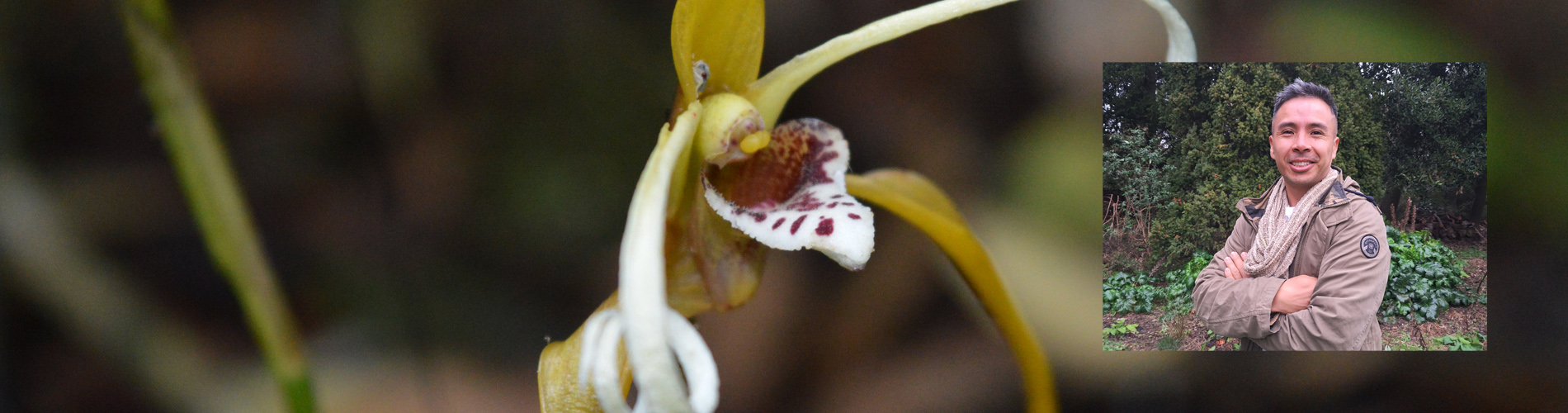
Dr Edicson Parra-Sánchez joins the Darwin-Hamied Centre, which promotes impactful research at the intersection of biodiversity science, conservation and economics, as the first Senior Research Fellow.
Dr Parra-Sánchez was born in Colombia, the country which first inspired his interest in orchids. With many different habitats and ecosystems, it is one of the more species-rich and diverse countries in the world.
He said:
“It is a wonderful place for fieldwork. In one day, you can go from the beach, then a couple of hours later, to a cloud forest, and then if you carry on you will reach a paramo. This is a high elevation habitat – a kind of reservoir of water.”
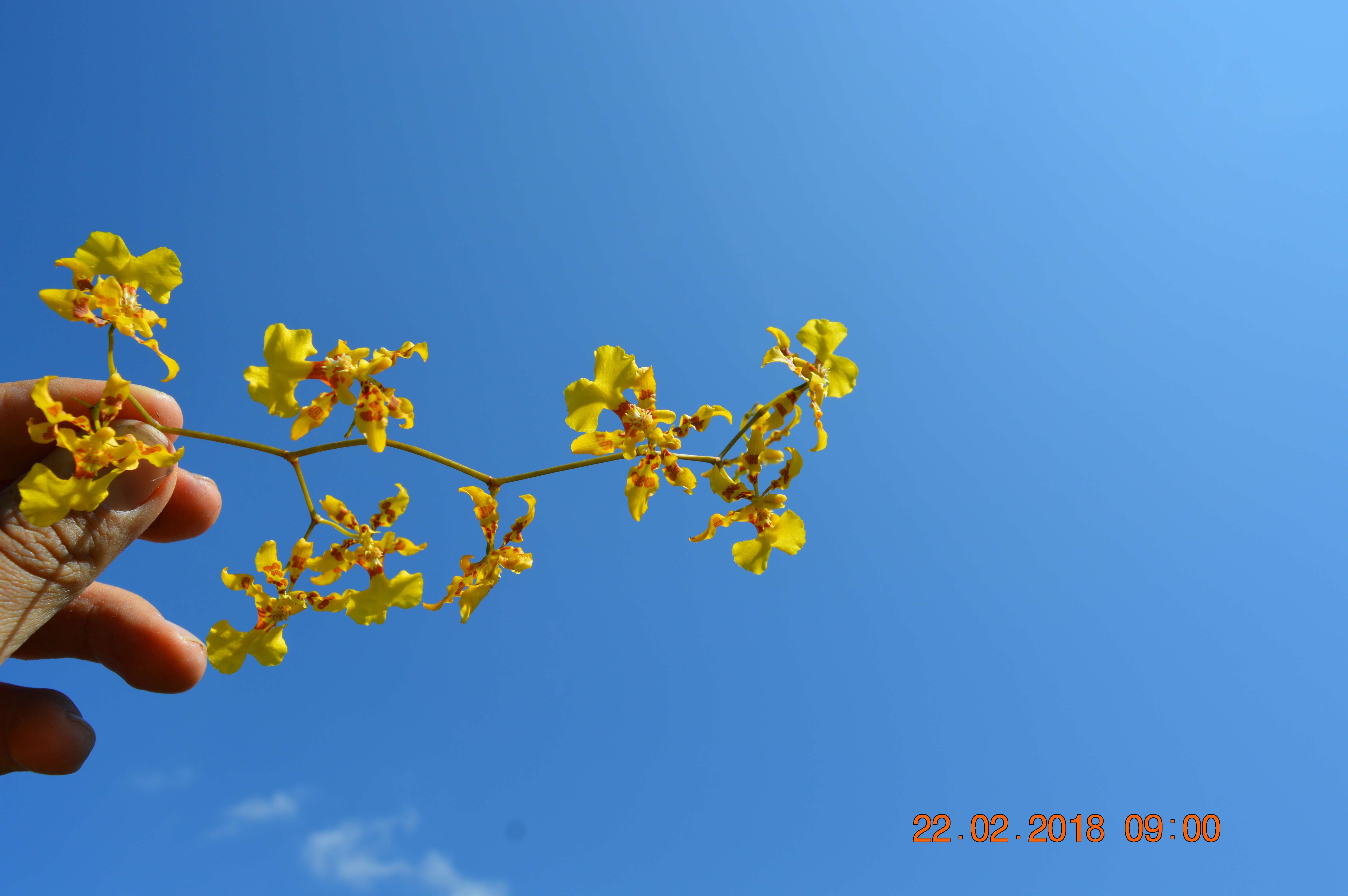
To date, he has discovered over 20 species of orchid including Lepanthes angelae, Hapalorchis dominicii, and Pleurothallis derekii named after his wife and sons.
He said:
“If I had to highlight one orchid I’d probably choose Epidendrum fusagasugaense because the discovery led to the protection of a mountain that was part of a mining project.”
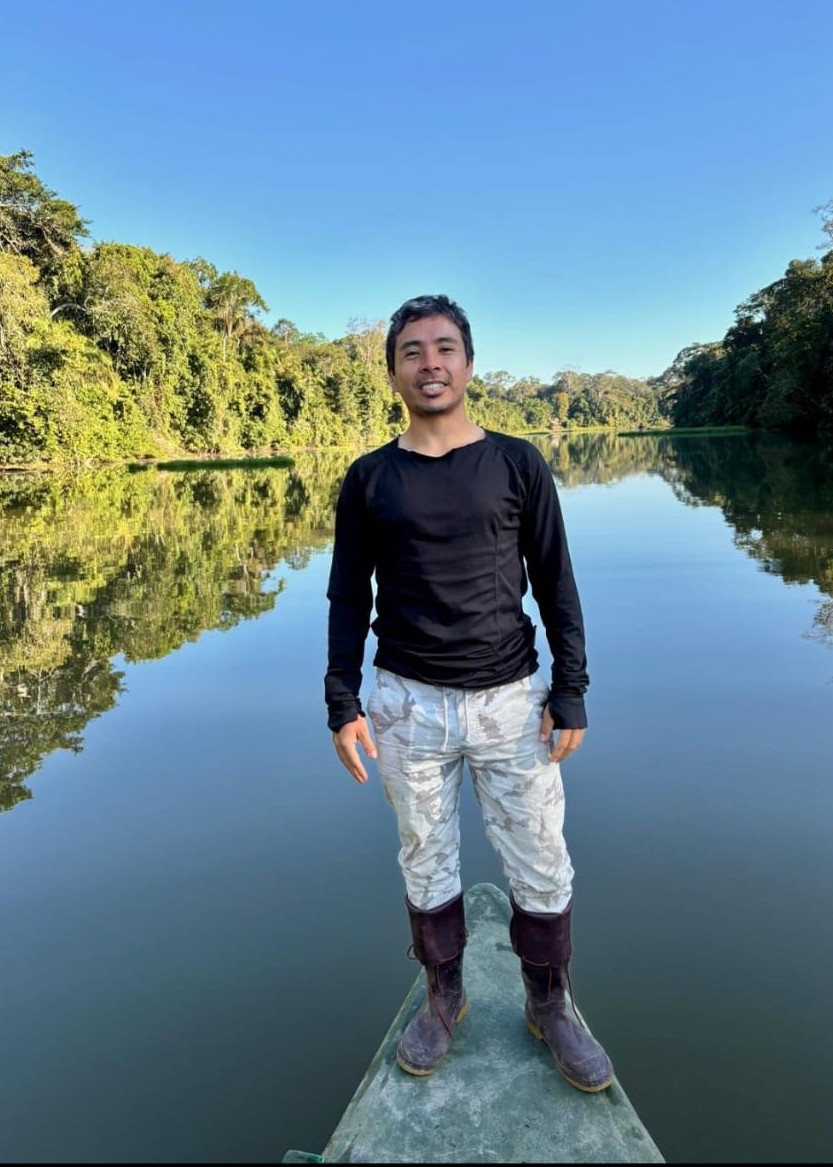
His PhD at Imperial College London demonstrated the impact of habitat loss and fragmentation on epiphytes (a plant which grows on the surface of another plant). This meant learning single rope tree climbing to survey and occasionally collect samples of the plants including orchids and bromeliads growing on the tree trunks sometimes 25 metres from the forest ground.
His focus at the Darwin-Hamied Centre will build a better understanding of ‘endemism’ - those species are found only in a specific, local area.
He said:
“When we lose a species through deforestation, it means that we are losing a piece of the big puzzle of understanding life because that species has adapted and evolved to that particular place.
We are losing not only species per se, but we are also losing that legacy and we're losing the potential of how people interact with that species, and the associated ecosystem services
Each species is a living library of solutions, such as unique chemical compounds, structural designs, and ecological strategies honed through deep time.”
Focussing first on the species-rich Andes, his research will expand to compare how micro endemics are understood and protected across the world by comparing different taxonomic groups.
When a deforested area starts to regrow, birds and dung beetles need between 10 and 15 years to reach between 80 and 100% of the species richness, but for orchids, he says, that preliminary results indicate that they do not return to these altered habitats even after 40 years.
He said:
“So, when you lose them, you really lose them. The capacity for orchids to disperse back into that ecosystem is quite low. And that's why there is an urgent need for us to at least maintain what we got and do not allow the deforestation frontier to extend.”
Dr Parra-Sánchez’s Fellowship will combine fieldwork with adding to a database of more than half a million records to produce an Atlas of Orchids in the Americas.
Collaboration with individuals and organisations will be key to the success of the Centre and towards understanding how conservation actions are helping or undermining the role of micro endemics.
He said:
“As the first Senior Research Fellow, building partnerships is an exciting challenge for me. I really believe that we can make a great impact as a Centre and that will make me really happy”
The Darwin-Hamied Centre, funded by a generous donation from the Yusuf and Farida Hamied Foundation, officially opened in July 2025. The founding director is Professor Daniel Field. A second Senior Research Fellow will join the Centre in October 2026.
More on Epidendrum fusagasugaense