
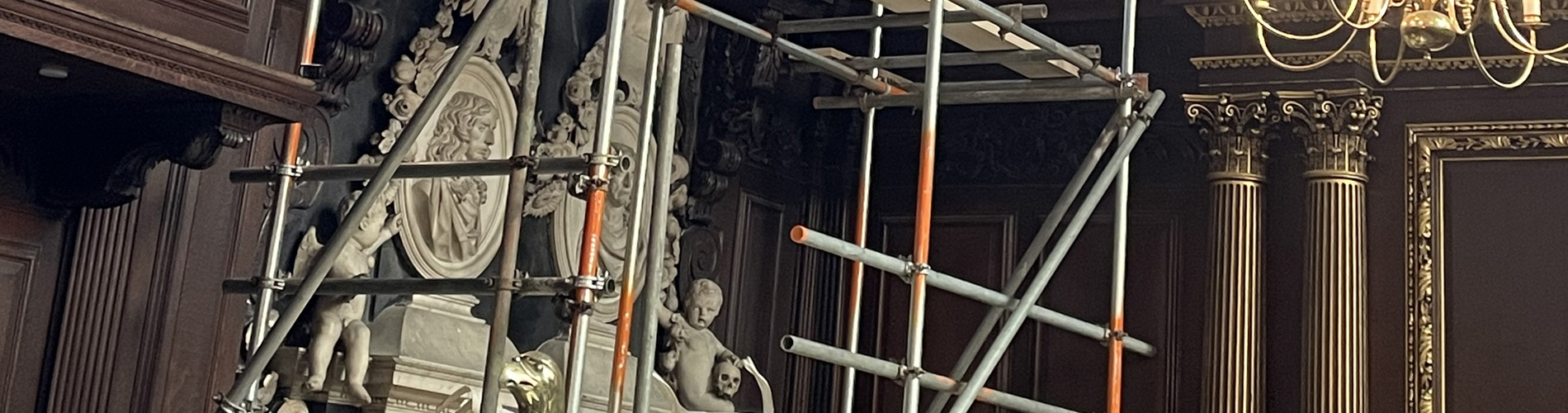
We caught up with Sophie Rowe, Head of Conservation at the Fitzwilliam Museum, and the team - Deborah Walton, Ayesha Fuentes, Carlota Maria Gaspar Viera and Alegria (Lily) Spencer - to learn more about the conservation of the Chapel monument to Fellows, Sir John Finch and Sir Thomas Baines.
How do you begin a project like this?
We start by looking closely at the sculpture to assess what condition it is in and what cleaning and repair is required. The monument is five metres tall, so we needed scaffolding with two floors to get access to the top, but the scaffolding also blocks parts of the sculpture. We had to plan the project in stages, working from the top down and removing the scaffolding in sections to reveal more of the sculpture as we went.
A photograph on the Historic England website taken in the 1950s shows us that much of the damage which we can see today was already present then, including a missing wreath and missing corners from the white marble. A few small pieces of the stone were loose or detached, so fixing them securely in place was a priority.
What are you trying to achieve through conservation?
The monument is over 300 years old and has been damaged, repainted, and repaired multiple times in the past, as well as acquiring a patina of ingrained dirt.
Our aim is to clean the sculpture enough to allow the beauty of the carving and natural materials to shine, while not erasing the marks of time completely. We are careful not to overclean the surfaces and we selectively repair and retouch areas so that the imperfections recede but are still visible if you look closely.
What is the monument made of?
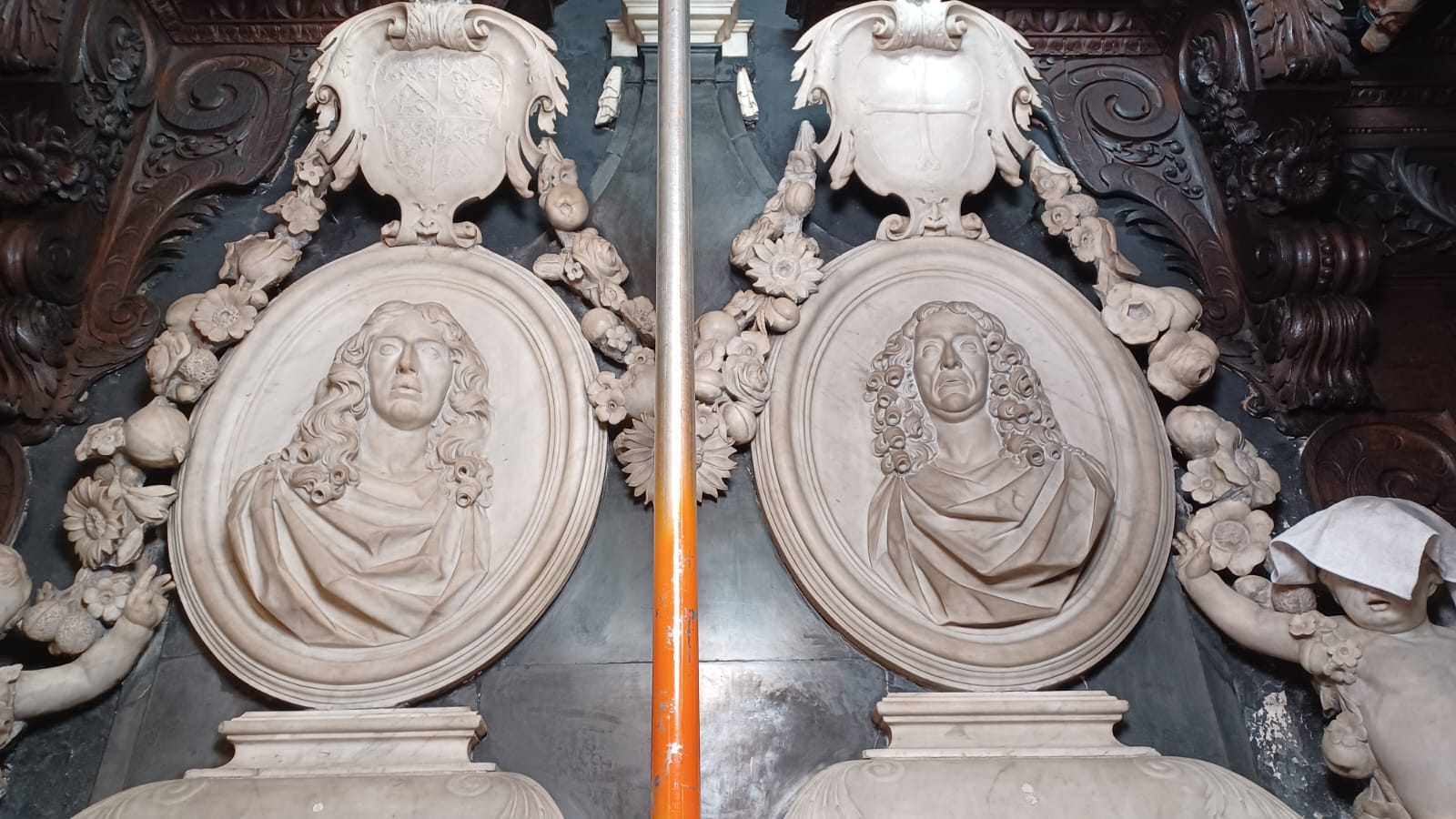
The monument is made of white and dark grey marble. It is built in sections which are assembled and held together with metal staples and fixings into the wall. Behind the carved sections is a lime plaster rendered wall which is painted black. The garlands are complicated arrangements of multiple parts with plaster as important as marble.
Who was in your team?
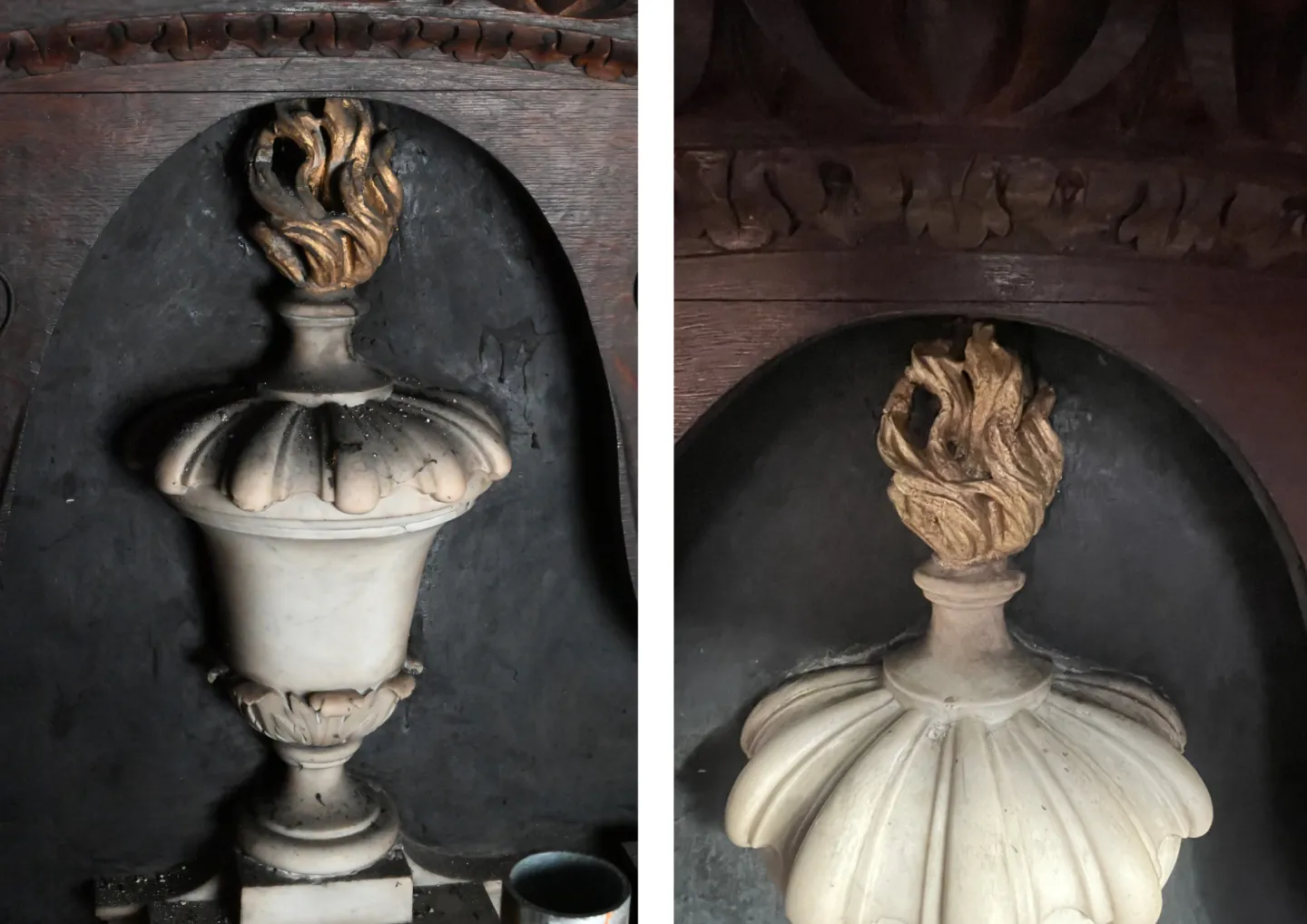
We had a team of three 3D object conservation specialists and two paintings specialists working in shifts. Lily and Carlota brought skills in retouching which were very useful, especially for the gilded flames on top of the urn. Deborah, Ayesha and Sophie are skilled in cleaning and repair of stone and wood.
Image
We worked in shifts to ensure that no-one had to work full time on this demanding project. It is also very helpful to come back after a couple of days away and look at the sculpture with fresh eyes when you need to judge how far to go in cleaning.
What challenges did you encounter?
Conservation can be an uncomfortable job. Conservators have to sit very still, work in awkward positions and do very tiny repetitive motions for long periods of time. Although we try and use the least toxic chemicals and safest methods possible, sometimes we still have to wear uncomfortable PPE (personal protective equipment).The plaster render turned out to be very flaky and unstable, so we needed to spend a lot of time securing it. This was not obvious until we had scaffolding in place and could look more closely at the higher parts of the monument.
What did you learn?
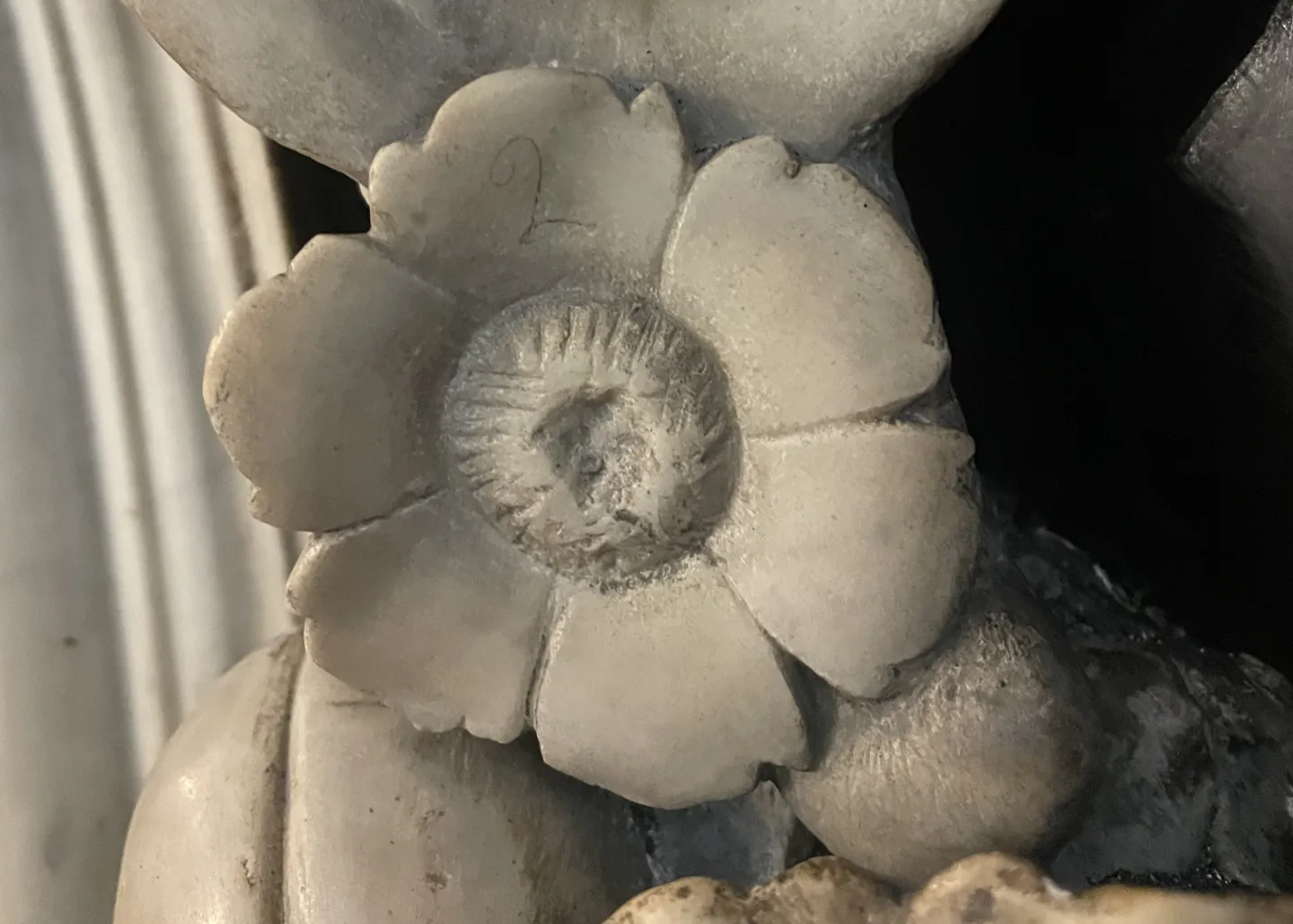
We were also excited to see pencilled letters and marks on the fruit and flower swags. These seemed to be guides to help the makers install the sections of carving in the right places. They are barely visible from the ground but are traces of the unrecorded studio craftsmen who installed the monument in the chapel centuries ago. Likewise, behind the top of the wooden canopy are signatures of other people who have worked on chapel repairs in the past.
Image
What can you tell about how the monument was carved?
The carvings of the busts is exceptionally skilled and the stone is the finest grained and purest coloured marble in the monument. All the other parts seem to have been carved by another person or people using slightly lesser quality stone. This would be normal practice in a sculpture studio in the seventeenth century, where there were likely assistant carvers specialising in fruit and flower swags or heraldic emblems, just as there were drapery and ‘hand’ specialist assistants in painters’ studios.
The sculptors drilled holes, sometimes in rows, to help with the placement of hair curls and other ornaments. We saw lots of these in the curly wigs on the busts, the hair of the putti (cherubs) and the edges of the heraldic shields.
Image
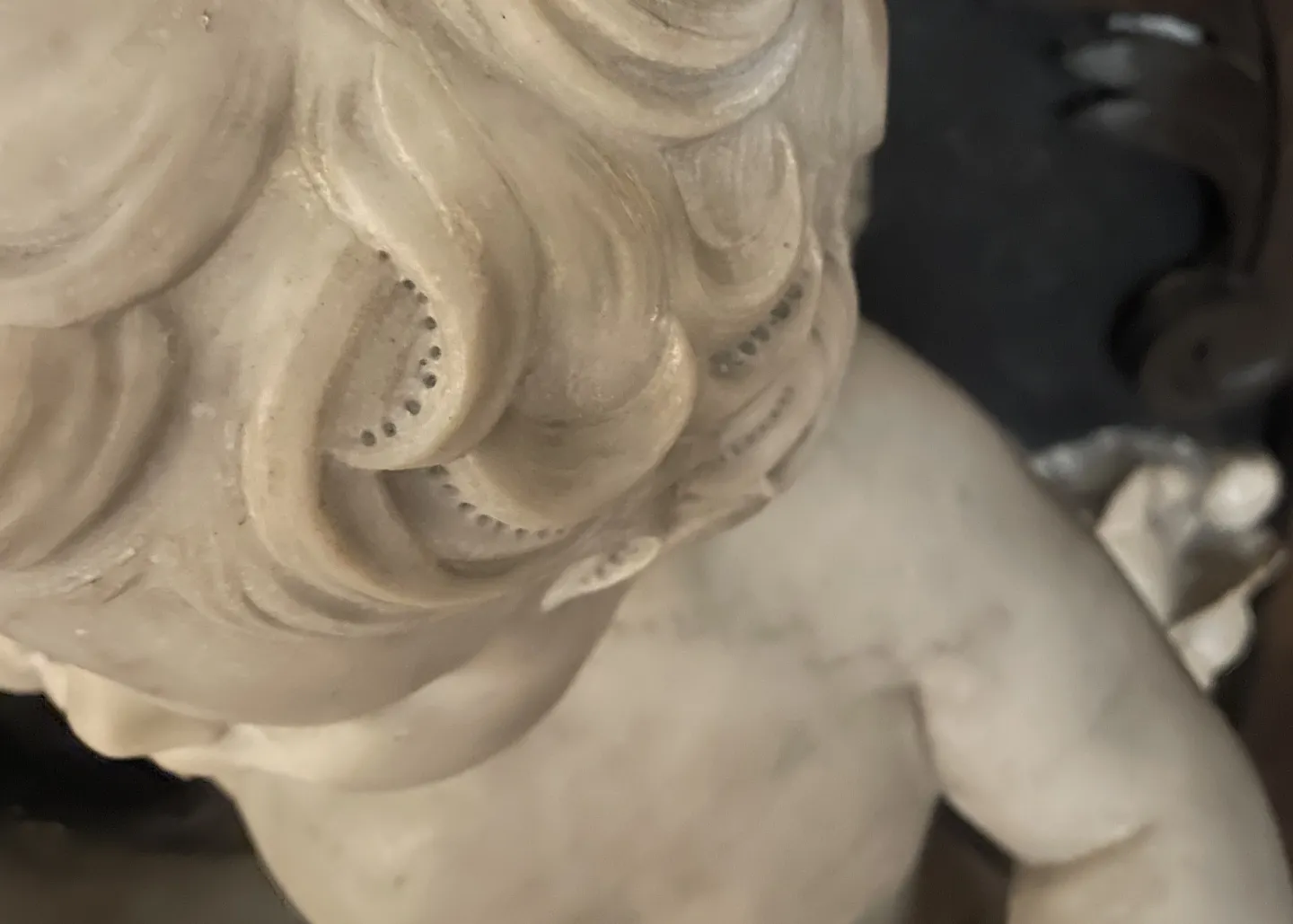
The sculptors didn’t waste any time or energy carving details that would not be seen, so the backs of the fruit are completely flat, and the backs of the cherubs are only roughly carved and not polished.
What did you notice up close to the monument?
Most exciting were the details of the faces such as moustache hairs which are very hard or impossible to see from below. Portraits suggest that Sir John Finch likely had a cleft lip, and you can feel a bump sculpted onto his top lip which is invisible from below. It was a wonderful moment to realise that this sensitive detail was present on the carving.
Image
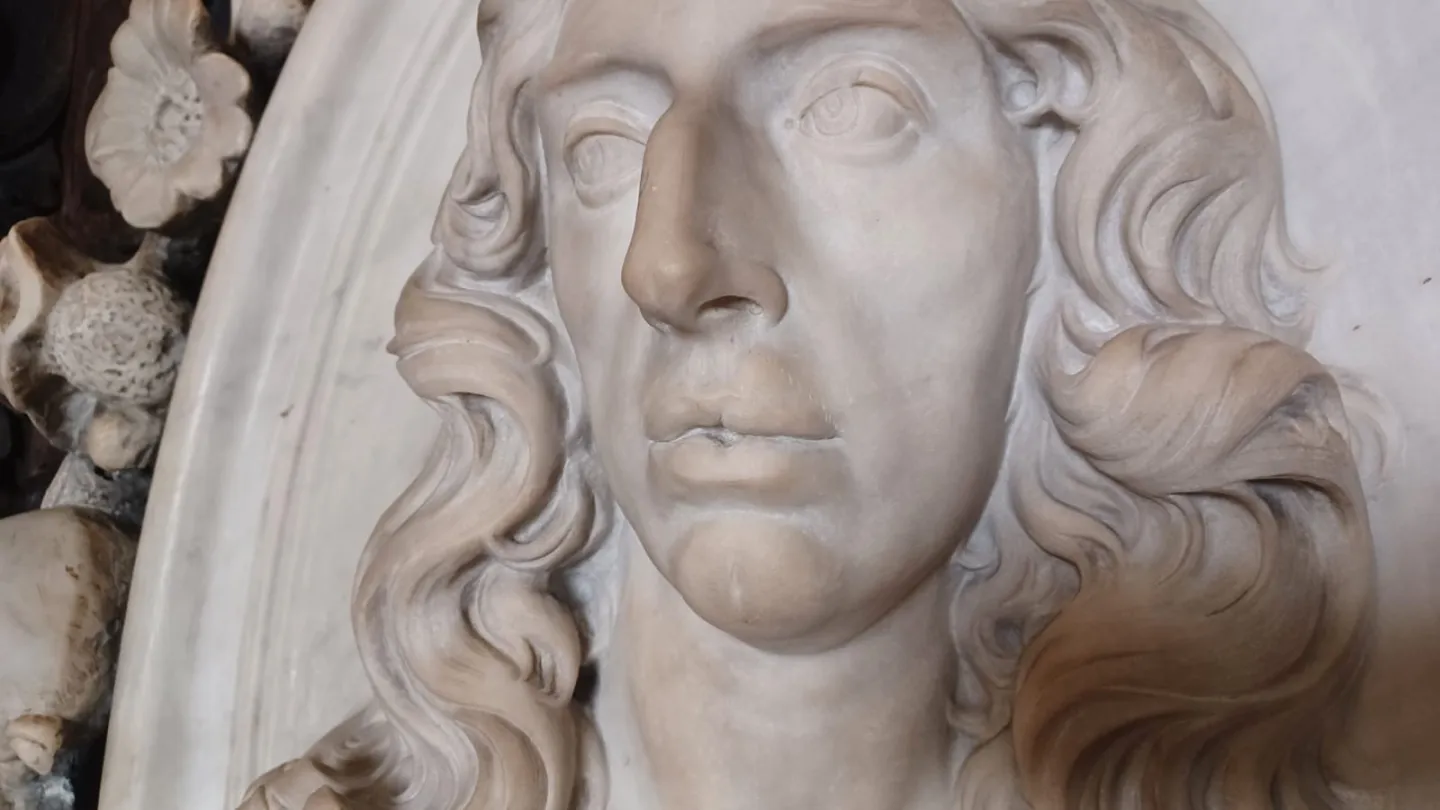
It was also fun to find graffiti on the wooden surround which showed that in September 1926 a certain cheeky person climbed across from the organ loft and scratched his name there. Definitely not a good idea!