
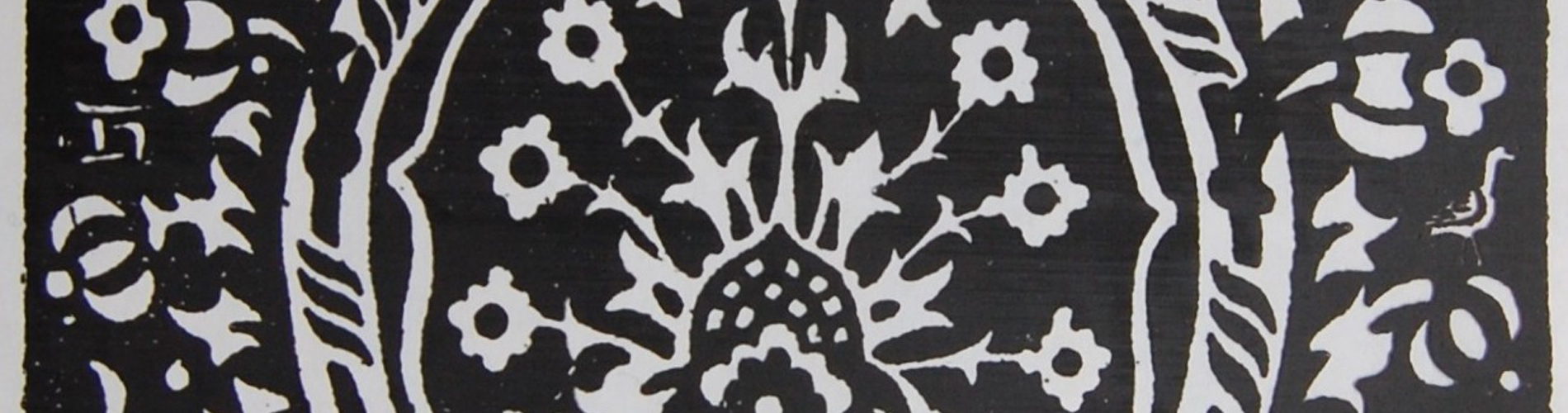
In 1911, workmen in the Master’s Lodge uncovered a black and white design believed to be oldest known example of printed wallpaper in the UK. In September, the fragments will go on display for the first time as part of Open Cambridge.
The paper pieces, saved by the builders, overlaid the original beams of the ceiling in the entrance hall of the Master’s Lodge.
Edwin Wilson, draughtsman, pieced together the beam paper fragments to reveal a familiar pomegranate motif probably influenced by Islamic designs.
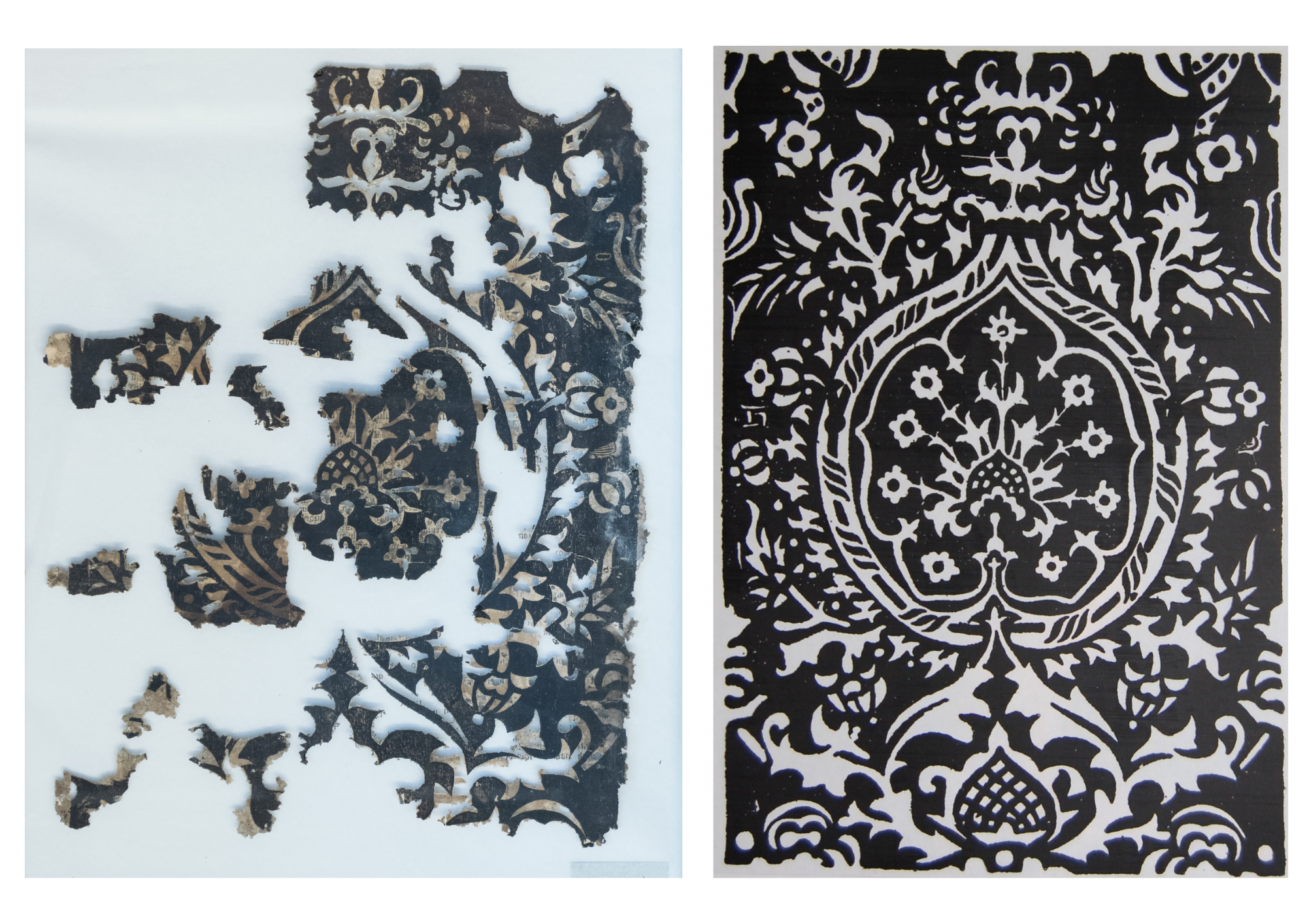
The cosmopolitan design was a mark of wealth and status, said Dr Harriet Lyon, Fellow, ‘the sort of thing that only elite households and institutions would really have been reproducing.’
The Lodge needed an opulent décor because it was intended to accommodate the College’s founder, Lady Margaret Beaufort.
The black and white pattern was printed from a carved woodblock onto early printed material waste.
On the back, the printed fragments include a papal indulgence dated 1503-13, a poem on the death of King Henry VII, and a proclamation announcing the accession of his son, Henry VIII in 1509.
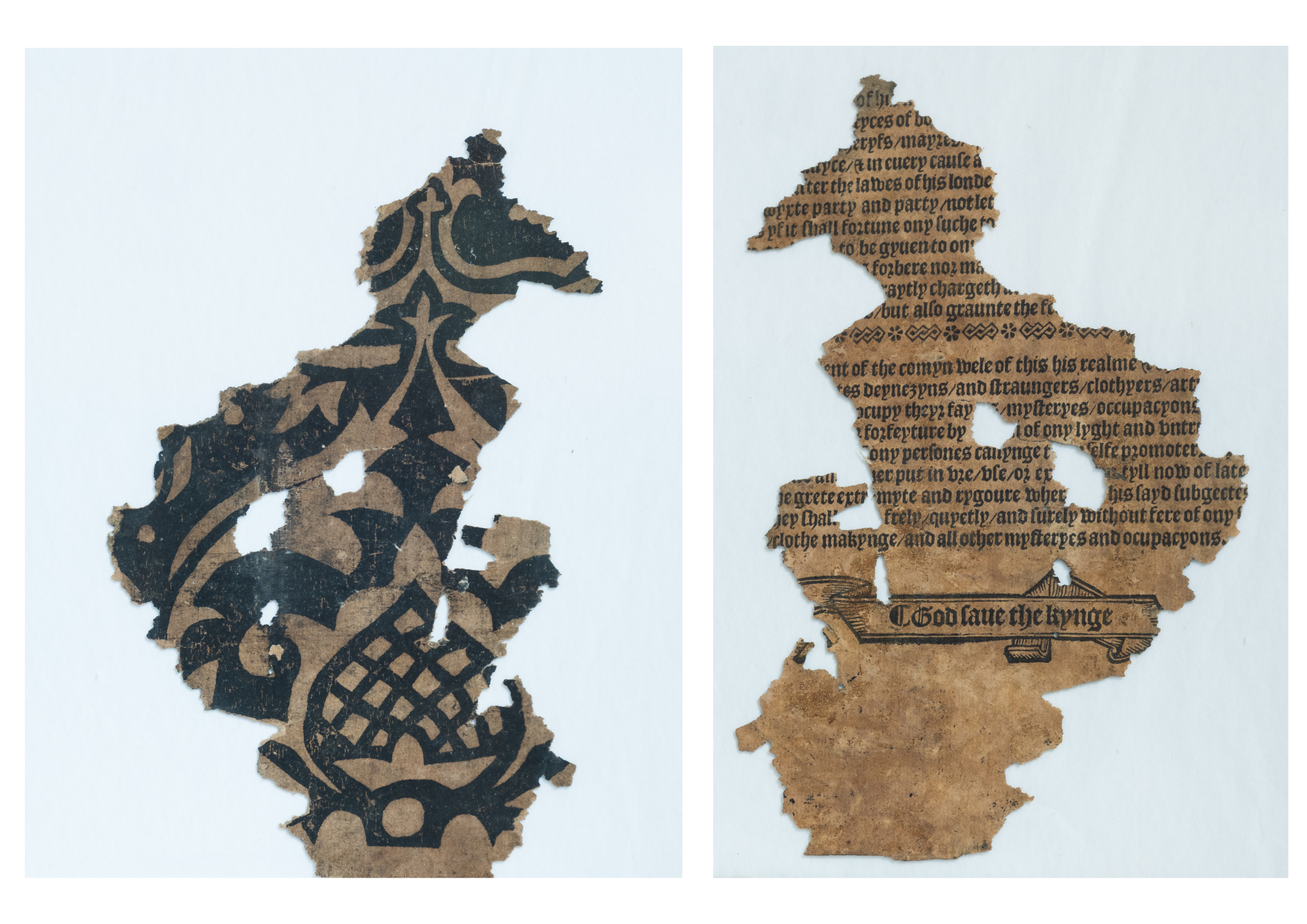
This dateable printed material confirms that the wallpaper belongs to the re-foundation of the College by Lady Margaret Beaufort in 1505 when the buildings in First Court, including the Master’s Lodge, were constructed.
The design also includes the mark or ‘rebus’ of the printer – an H on the left and a bird on the right – which signifies York-based printer, Hugh Goes. His rebus was an initial H for Hugh and a goose as a play on his surname.
When the wallpaper was discovered, it was claimed as a unique survival of Goes’ output. Since then, other examples of Goes’ printed material, have been identified. This includes the Directorium Sacerdotum, an ecclesiastical calendar nicknamed the ‘Pica’ (Latin for magpie) at Sidney Sussex College.
The wallpaper fragments are on display as part of Open Cambridge from 11-20 September and then as a special exhibition starting on Monday 19 October 2026 (and Mondays thereafter).