The Environment, Law and Economics degree offers one of the best employment records across the University. The course’s high intellectual content and its focus on applying theory to real-world problems mean you graduate equipped with very sought-after skills.
The department's alumni association can offer valuable advice on future career options. Many graduates become chartered surveyors, while others go on to work in a wide range of professions including the City, the Civil Service, management consultancy, planning, teaching and law.
| This course is changing it's name from Land Economy (2026 entry) to Environment, Law and Economics (2027 entry). The course structure, contents, and admissions process will all remain the same. See the news article here and the FAQ's page. |
| Bookings are open for our Environment, Law and Economics online subject meeting with the Director of Studies on Thursday 28 May - book here |
The Environment, Law and Economics course (or ‘tripos’) is a three-year degree. Please visit the University website for full details of the course content and structure, including the course film. You will also find information on the Department degree page. If you have further questions, please contact tripos@landecon.cam.ac.uk.
Taking this degree gives you partial exemption from the legal professional requirements of The Law Society and The Bar Council, as well as accreditation by the Royal Institution of Chartered Surveyors (RICS) and the Incorporated Society of Values and Auctioneers (ISVA).
The Department of Land Economy (five minutes’ walk away) organises your lectures and Christ’s Director of Studies Kelvin MacDonald arranges your ‘supervisions’ here at the College. These are tutorial teaching sessions in small groups, usually with students from other colleges, which enable you to benefit from personalised feedback on your work.
Each year this course admits around 55 undergraduates across the University. Although the department is fairly small, there’s a strong community spirit among students, bolstered by the thriving Land Society.
Hannah and Mati both studied Environment, Law and Economics here when it was called Land Economy. They have written about their experiences in their student profiles.
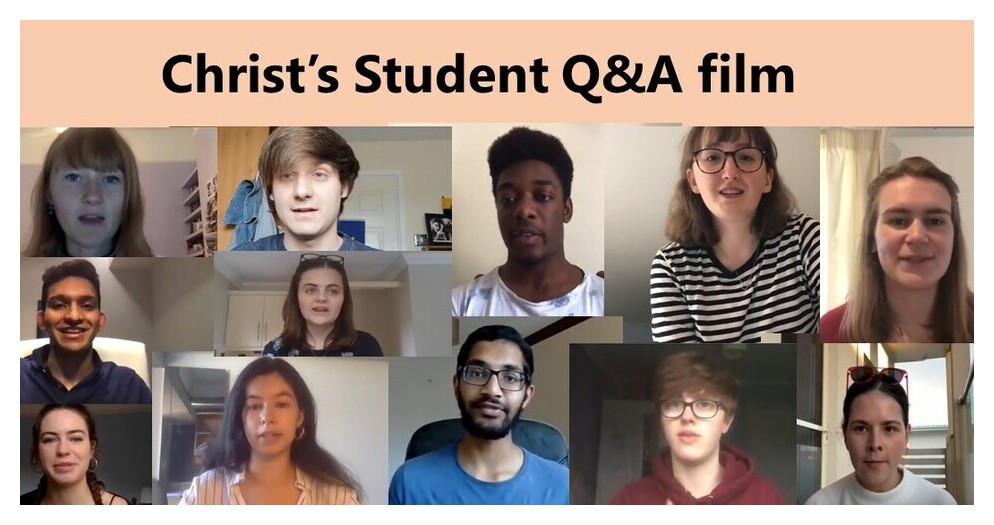
If you would like to hear from other Christ's students, please watch the Christ's student Q&A film, and visit our Student Profiles page.
Christ’s gave me loads of surprises - for example, a library open 24/7, which can obtain any book for you, free laundry facilities, and the College cats. There is also enthusiastic and effective support available from the College nurse, your tutor, the chaplain, etc. If something troubles you, you’re never left to deal with it on your own.
How to apply
Visit How to Apply for full details and a timeline of the application process. We welcome applicants from all backgrounds and school types, all over the world. If you're applying from outside the UK, please read our international students section.
There is no Admissions Assessment for Environment, Law and Economics. At Christ's, we do not ask applicants for this subject to upload written work either.
Subjects: what do you need?
If you apply for Environment, Law and Economics we don’t expect you to have studied Law, Economics or the environment at school. We’re looking for students with the highest intellectual ability. We don’t require you to take any subjects in particular, but when choosing your post-16 options, Economics, Mathematics and Geography would be helpful. For information about common subjects taken by successful applicants, please see the entry requirements tab in the university course information.
We encourage students to attend one of our regular Subject Matters webinars for help with choosing Post-16 subjects for competitive university applications. This webinar is pitched for students aged 14-16 though it is also possible to attend when you have started sixth form.
If we select you for interviews, these take place online (on Microsoft Teams) in early December. Selected candidates are normally interviewed for 35-50 minutes in total. At Christ’s, we split the time into two interviews with academics in Environment, Law and Economics. You will normally have two interviewers in each interview, and you can choose to do your interviews at home (most candidates do this) or at school if easier.
During the interviews we may ask you about topics you’re not familiar with. Our aim is to assess your innate ability when working through unprepared questions and see how quickly you absorb new ideas. It’s not about catching you out.
There is no preparatory reading, no test that you take on the day of your interviews and there is no additional 'general interview' - you just need to attend the two Environment, Law and Economics interviews scheduled for you.
Further, more general information about interviews (including two useful films) is available in the Cambridge interviews section, and it's worth also having a look at supervisions (short film here), as interviews are similar to what you do every week as a Cambridge student.
At Christ's we don’t have fixed quotas for places, so the number of students we admit in any year depends on the strengths of the applicants. In Environment, Law and Economics, we admit around two students each year.
We define the conditions of each offer individually, but our minimum conditional offer for Environment, Law and Economics is:
> A*AA at A-level
> 42 points overall in the International Baccalaureate with 7,7,6 in Higher Level subjects
> A1, A2, A2 in three Scottish Advanced Highers
You need to be academically ambitious: the majority of Christ's students arrive with higher grades than are required.
If you're taking another qualification, we expect you to be working at or close to the top of the mark range i.e.
> Baccalauréat français international (BFI): 17 (mention très bien) out of 20 overall, with a minimum of 17 in individual subjects
> European Baccalaureate: at least 85% overall, with 9/10 in relevant subjects
You can look up other qualifications in the offer levels for other exam systems and international entry requirements, and if you are applying from outside the UK please read the Christ's international students section for further information and check the country pages.
If you will have finished school when you apply, please also read about post-qualification applications, taking a gap year, and, if relevant, applying from a university.
| Reading suggestions | As Environment, Law and Economics is a course that you start new at university, it is a good idea to do some reading to get a sense of the material you can cover in the degree and whether you will enjoy studying it. |
| Supercurricular Activities | Things you can do outside school to develop your interest in Environment, Law and Economics |
| Discover Land Economy | An introduction to Environment, Law and Economics at Cambridge |
| HE+ website | Website for secondary school students who would like to explore relevant materials. |
| CamGuides | Introducing the academic and information skills that you will need during your studies, as well as how and where you be working. |
I prepared by keeping up with current news and making sure I was well informed, as well as by looking over my A Level content. I’d just say that the most important thing is thinking out loud, giving questions a go is sometimes enough. Just be yourself and try to stay calm in the interview.
Come to an open day or online event
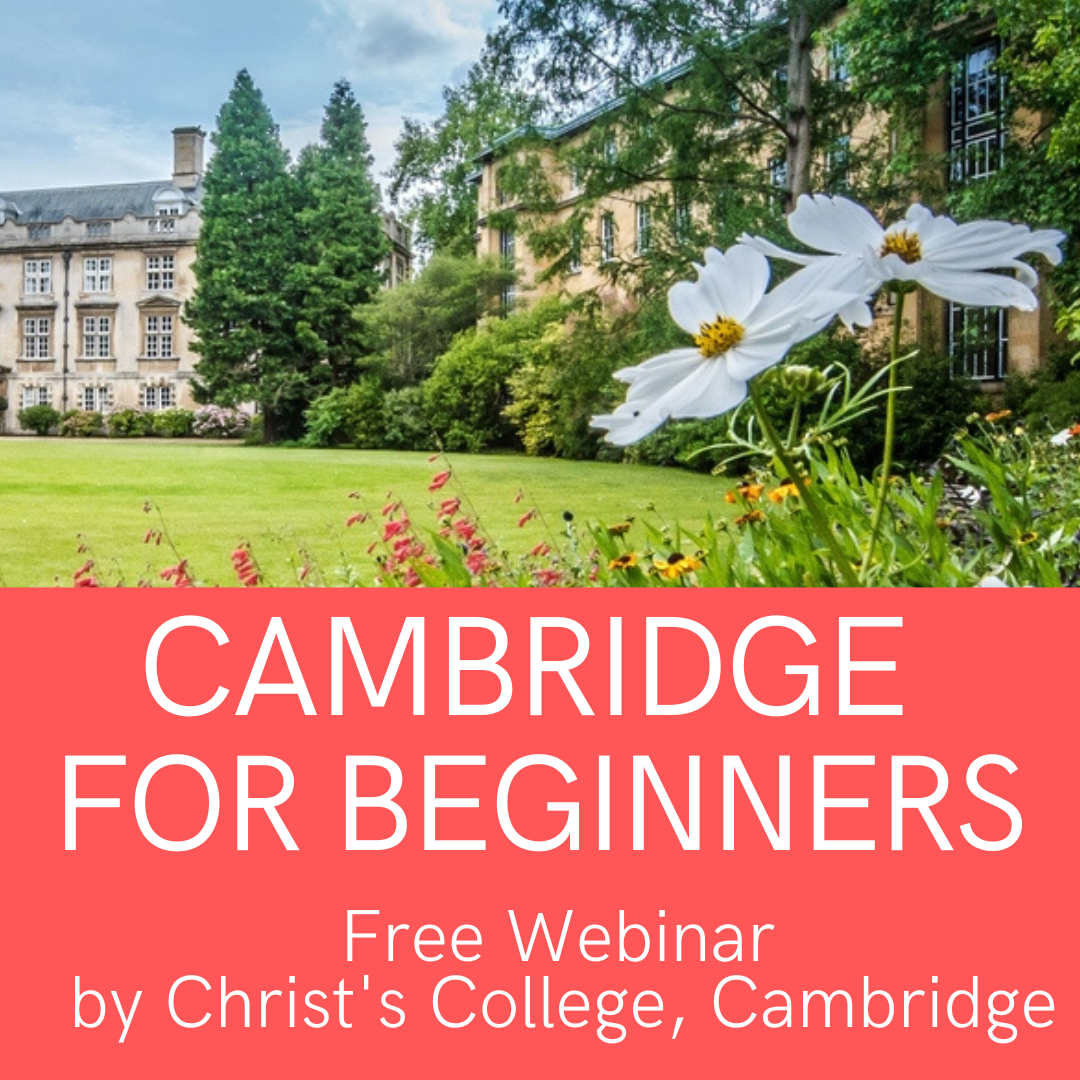
Our open days and events page advertises regular online opportunities as well as events you can attend in Cambridge. Between February and August we run regular webinars:
> Subject Matters: The importance of post-16 subject choices
> Cambridge for Beginners
> Understanding Student Finance
> Personal Statements and preparing for an application
> Webinars for applicants outside the UK
For Land Economy, see in particular
> College Open Days
> Christ's Online Subject Meetings in May
> Cambridge SU Shadowing Scheme (eligibility criteria apply)
> Experience Christ's Summer School (eligibility criteria apply)
> Sutton Trust Summer School (eligibility criteria apply
For more detail of what the course involves, read Undergraduate Land Economy admissions on the University website and visit the Department of Land Economy site too.
If you have any queries, please send them to admissions@christs.cam.ac.uk and we’ll help however we can.